




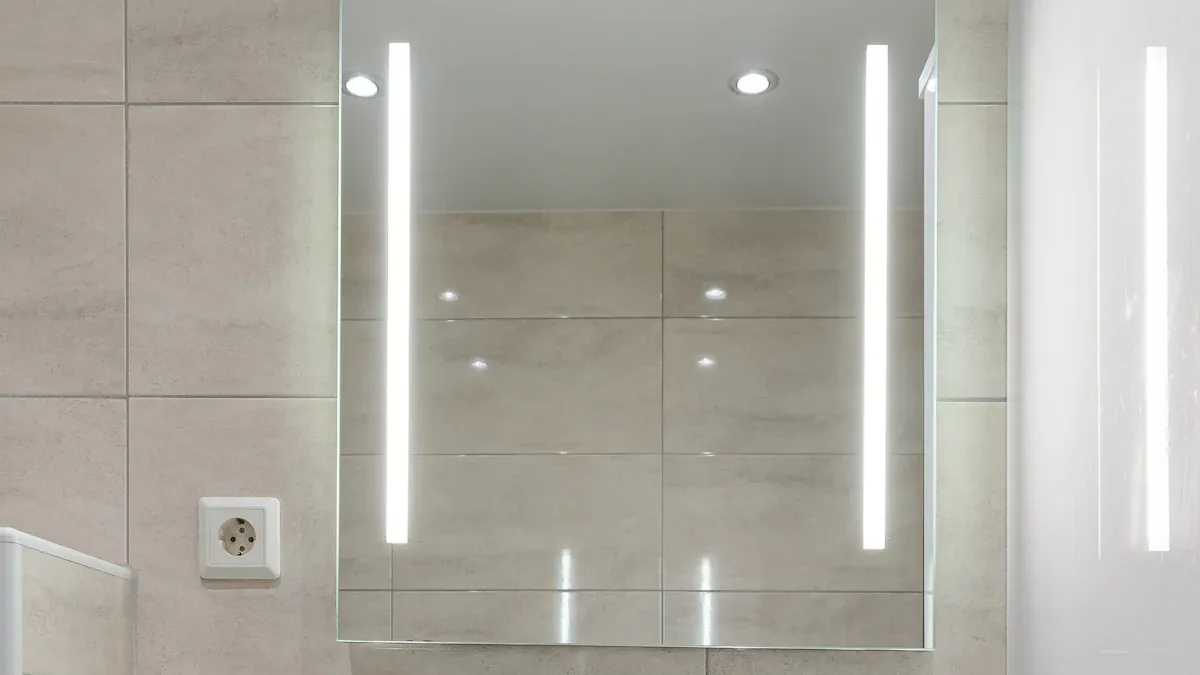
The edge of a High-End LED Bathroom Mirror profoundly influences its overall quality and visual impact. For these sophisticated fixtures, laser cutting precision in cutting and edging is not merely a luxury; it is a critical standard. This method significantly elevates aesthetics, durability, and overall value. The global LED Bathroom Mirrors market is growing, projected at a 10.32% CAGR from 2023 to 2030, underscoring the demand for high-quality LED Mirror Light products. Laser Cutting ensures this non-negotiable level of excellence.
Key Takeaways
- Laser cutting makes mirror edges smooth and chip-free. This improves how the mirror looks and how long it lasts.
- Laser precision helps put LED lights into mirrors. It makes sure the lights fit well and work correctly.
- Mirrors cut with lasers last longer. They are stronger and resist damage better than mirrors cut in old ways.
The Foundation of Quality: High-End LED Bathroom Mirrors
Defining Excellence in High-End LED Bathroom Mirrors
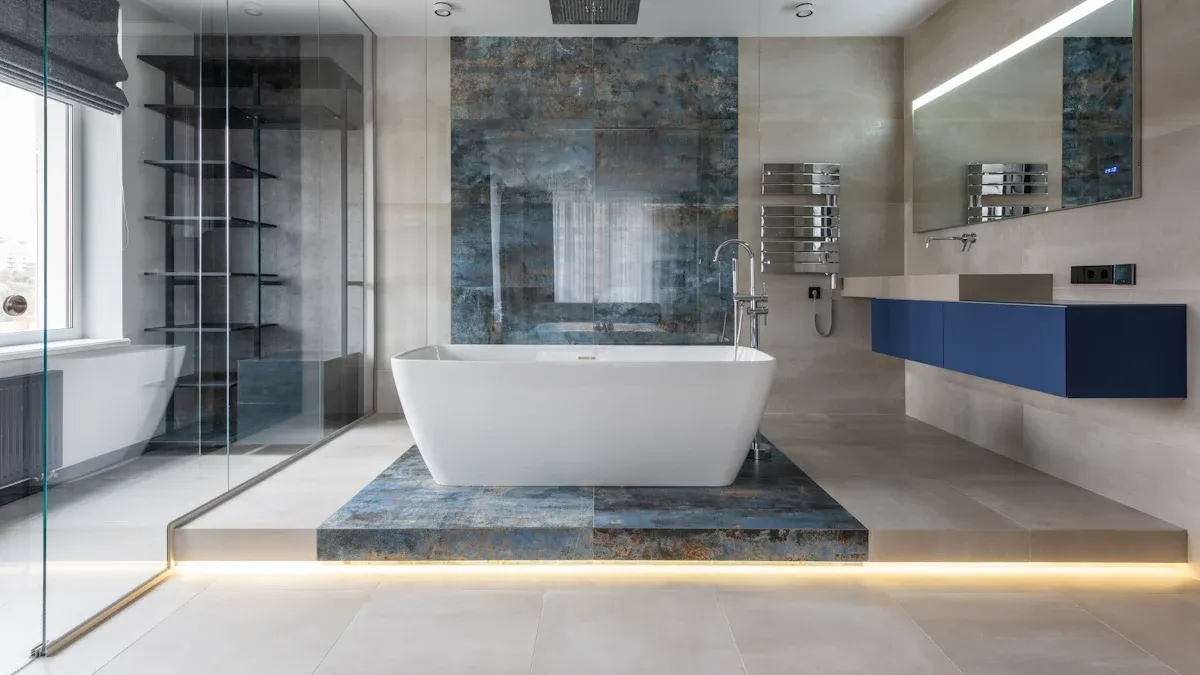
A High-End LED Bathroom Mirror offers more than just a reflective surface. It integrates advanced features that elevate the user experience. These mirrors often include anti-fog technology, ensuring a clear view even after hot showers. Touch sensor controls provide a minimalist interface for managing lighting and defogger functions with a simple tap. Users can customize their environment with dimmable and color temperature lighting, offering options from warm (2700K) to daylight (6000K). Some models even feature Bluetooth audio integration, allowing for music or podcasts. An anodized aluminum frame ensures durability and resistance to corrosion and moisture. These mirrors also utilize superior materials, such as 5mm copper-free silver mirror glass, which prevents common issues like “black edge” in humid conditions.
The Critical Role of Edging in High-End LED Bathroom Mirrors
Edging plays a critical role in the overall quality and safety of these sophisticated mirrors. Precise edging ensures a seamless aesthetic and prevents potential hazards. High-End LED Bathroom Mirrors must meet stringent safety and quality standards. For instance, they often carry UL or ETL listings for North America and CE certification for European markets. An IP44 or higher rating confirms protection against water splashes, making them safe for damp bathroom environments. Beyond certifications, the choice of materials is vital. Copper-free silver mirrors are preferred for their superior resistance to oxidation. Manufacturers also apply safety backing film to prevent shattering. High-quality LED drivers ensure a lifespan exceeding 50,000 hours, minimizing flicker and ensuring consistent performance. These meticulous details, including the precision of the edge, define a truly superior product.
Traditional Edging: Limitations for High-End LED Bathroom Mirrors
Conventional Methods and Their Inherent Flaws
Traditional mirror edging relies heavily on manual techniques. Craftsmen use tools like a glass cutter, which features a small rolling wheel, a notched section, and a balled tip. Sometimes, a carbide scribe or steel file serves this purpose, though these often leave more jagged edges. The process begins by scoring a line on the mirror surface. A straightedge ruler guides the cutter. The craftsman applies firm, consistent pressure, pulling the cutter in one smooth motion. A crackling sound indicates a successful score. After scoring, they tap along the line with the cutter’s ball end to deepen the cut.
Breaking the glass then follows. One common method involves placing a wooden dowel underneath the score line. The craftsman holds one side of the mirror steady and applies firm pressure to the other side, snapping it cleanly. Another technique uses a table edge. The mirror’s score line aligns just over the edge. The craftsman holds the larger portion against the table and applies downward pressure to the overhanging piece. These conventional methods often result in inconsistent cuts, jagged edges, and a higher risk of chipping or cracking. They depend heavily on individual skill and can introduce imperfections.
Compromised Aesthetics and Durability for Premium Products
These inherent flaws of traditional edging significantly compromise the aesthetics and durability of premium products. For High-End LED Bathroom Mirrors, uneven or rough edges are simply unacceptable. Such imperfections detract from the sleek, sophisticated appearance customers expect from a luxury item. A mirror with a poorly finished edge cannot achieve the seamless integration required for modern bathroom designs.
Furthermore, rough edges can compromise the mirror’s structural integrity. They create weak points, making the mirror more susceptible to damage over time. Integrating LED components into a mirror with imperfect edges becomes challenging. Gaps or uneven surfaces can expose wiring or allow moisture ingress, reducing the product’s longevity and safety. While manual finishing with sandpaper can smooth edges, this process is labor-intensive and still may not achieve the flawless precision demanded by high-end specifications. These compromises ultimately diminish the perceived value and long-term performance of a premium mirror.
Laser Precision: The Unrivaled Advantage for High-End LED Bathroom Mirrors
The Science Behind Flawless Laser Cutting
Laser cutting represents a significant leap in manufacturing technology for glass and mirrors. The process begins with careful preparation. Workers clean the glass surface to remove impurities. This step ensures optimal laser absorption and consistent cutting quality. Next, technicians calibrate laser parameters. They adjust power, speed, focal length, and assist gas type based on the glass type and thickness. This calibration achieves precise cuts without damaging the material. The laser beam then focuses to achieve high energy density. This intense energy heats the glass to its melting or vaporization point along the cutting path.
The focused laser cuts by melting or vaporizing the material. For thicker glass, the laser may first score the surface. Mechanical breaking then separates the glass. Gases like nitrogen or oxygen enhance cutting efficiency and edge quality. These assist gases prevent oxidation and minimize post-processing. Unlike other materials, glass laser cutting primarily uses ultrafast pulsed lasers (UPL). These lasers create clean, accurate fractures along a predetermined path. They do not melt the material in the same way as plastics for a quick, clean cut. The thermal stress from the laser causes even thick or dense glass to separate cleanly. This process results in minimal heat damage. It allows for intricate designs with reduced chipping or cracking because the laser does not physically contact the material.
Ultrafast pulsed lasers are the industry standard for precise glass cutting. Glass absorbs CO2 laser energy, which leads to uncontrollable micro-fractures. These micro-fractures hinder intricate shapes. UPLs, with their rapid duty cycle, reduce heat zones in the glass. This minimizes unwanted micro-scale cracking and allows for precise cuts. Nanosecond or picosecond infrared MOPA fiber lasers are commonly used for precise cutting of mirrors. These lasers offer better control over thermal effects and stress. They enhance yield and processing efficiency. Picosecond laser glass cutting machines use ultrashort laser pulses. This leads to higher precision and finer details compared to traditional lasers. Advantages include reduced heat-affected zones, minimal chipping or breakage, and increased processing speed. They also offer the ability to cut complex shapes with exceptional clarity and accuracy.
Unparalleled Aesthetic Perfection and Seamless LED Integration
Laser precision delivers an unparalleled aesthetic for High-End LED Bathroom Mirrors. It creates perfectly smooth, chip-free edges. These edges are impossible to achieve with traditional cutting methods. This flawless finish contributes significantly to the mirror’s luxurious appearance. Laser technology also facilitates seamless integration of LED components. It removes reflective material on the back of the smart mirror. This creates a transparent effect for lighting designs using LED strips. This non-contact machining minimizes material loss and avoids damage. It is especially suitable for brittle materials like glass.
Laser precision offers strong controllability. It allows for precise adjustment of laser power and dynamic parameter changes. This adapts to different materials and processing needs. Fiber laser technology replaces traditional chemical etching for smart mirror manufacturing. It enables the removal of silver coatings or paint. This restores the mirror to a transparent state. This transparency allows for the incorporation of integrated display and interactive functionalities. These include backlighting with LED strips. The process is non-contact, highly precise, and pollution-free. It ensures no residue or burrs and delivers high-quality results. Customized services enable the creation of personalized patterns and designs. They remove coatings to form transparent areas for backlighting.
Enhanced Durability and Longevity for High-End LED Bathroom Mirrors
Laser precision significantly enhances the durability and longevity of mirrors. Traditional cutting methods often leave microscopic cracks or imperfections along the edges. These weak points make the mirror more susceptible to chipping, cracking, and breakage over time. Laser cutting, however, produces incredibly clean and smooth edges. It minimizes these structural weaknesses. The reduced heat-affected zones from ultrafast lasers prevent internal stresses within the glass. This makes the mirror more resilient against thermal expansion and contraction.
A mirror with perfectly cut edges also allows for a tighter, more secure fit within its frame or mounting system. This reduces vibrations and potential damage from everyday use. When integrating LED components, precise laser cuts ensure a perfect seal for wiring and lighting elements. This prevents moisture ingress, a common cause of failure in bathroom environments. By eliminating rough edges and ensuring precise component fit, laser technology extends the lifespan of the mirror. It maintains its pristine appearance and functionality for many years.
Design Flexibility and Innovation in High-End LED Bathroom Mirrors
Laser cutting unlocks unprecedented design flexibility and innovation for mirrors. It delivers clean edges and accurate detail. This is crucial for creating intricate designs in mirrors and other decorative items. Laser cutters do not exert mechanical force. This allows for the cutting of extremely delicate parts. It makes them ideal for artistic pieces requiring intricate details. These details are difficult to achieve with other manufacturing techniques like CNCs.
Manufacturers can create unique mirror shapes. For example, a wall mirror shaped like the continental U.S. becomes possible through laser cutting. This demonstrates how the technology enables unique and patriotic designs. Laser cutting also enables innovative lighting patterns and integrated features. Dr. Michael Johnson, a manufacturing engineering expert, highlights the significance of laser cutting in achieving seamless edges and flawless surfaces in frameless LED mirror production. This contributes to the aesthetic quality and integration of features through precise manufacturing. The Sole Oval Mirror utilizes ‘mirrored polycarbonate with laser cut-outs for illumination.’ This directly shows how laser cutting creates integrated lighting features. It forms openings for light sources within the mirror material.
The Investment Value of Laser-Cut High-End LED Bathroom Mirrors
Superior Quality Justifies the Investment
Investing in a laser-cut mirror brings superior quality. Precision cutting ensures flawless edges. These edges prevent common issues like chipping. High-quality materials also contribute to durability. Greenergy, for instance, holds CE, ROHS, UL, and ERP certificates. These certifications confirm high standards. Such mirrors offer advanced features. They include anti-fog technology and dimmable lighting. These features enhance daily use. The initial cost reflects this superior craftsmanship. It also reflects the advanced technology used. This quality elevates the entire bathroom space. It provides a luxurious experience. A High-End LED Bathroom Mirror becomes a lasting asset.
Long-Term Satisfaction and Sustained Aesthetic Appeal
Laser-cut mirrors offer lasting satisfaction. Their aesthetic appeal endures for many years. Precise manufacturing prevents degradation. Flawless edges resist moisture damage. They also resist wear and tear. This maintains the mirror’s pristine look. Integrated LED components last over 50,000 hours. This ensures consistent performance. The mirror remains a focal point. It continues to enhance the bathroom’s design. This sustained beauty adds value to a home. It provides a reliable and elegant solution. Customers choose green and luminosity with Greenergy. They invest in enduring quality.
For High-End LED Bathroom Mirrors, laser precision defines exceptional quality. It separates truly superior products from merely good ones. Prioritize laser-cut mirrors when investing in your bathroom space. They offer unmatched elegance and durability. Elevate your space with the undeniable difference of laser precision.
FAQ
What makes laser-cut mirrors superior to traditionally cut mirrors?
Laser cutting creates perfectly smooth, chip-free edges. This enhances aesthetics and durability. Traditional methods often leave imperfections.
How does laser precision benefit LED integration in mirrors?
Laser precision removes reflective material precisely. This allows for seamless LED strip integration. It creates transparent areas for lighting designs.
Do laser-cut mirrors last longer than other mirrors?
Yes, laser-cut mirrors have enhanced durability. They minimize structural weaknesses from rough edges. This extends the mirror’s lifespan significantly.
Post time: Jan-15-2026


